
Stake News Check #27 from 3/27/2026 to 4/08/2026 Governance, Security and Cooperation in West Africa

Over the past two weeks, Africa has recorded a series of political, security and economic developments with immediate implications for governance and regional cooperation.
In Benin, the Economic Community of West African States announced the appointment of former Ghanaian president Nana Akufo-Addo to lead its electoral observation mission for the presidential election scheduled for April 12, with deployment planned from April 7 to 15 in line with its protocol on democracy and good governance. Two candidacies have been confirmed: Romuald Wadagni, representing the ruling majority and current Minister of Economy and Finance, and Paul Hounkpè, candidate of the Forces Cauris for an Emerging Benin (FCBE).[1]
In Burkina Faso, military leader Ibrahim Traoré expressed, during a state television interview, a rejection of liberal democratic norms, stating that the country would follow its own approach. Having come to power through a coup three years ago, he had initially pledged a return to civilian rule by July 2024, but authorities have since extended the transition by five years. Concerns related to rights and security were also noted, including actions targeting opposition figures, media and civil society actors.[2]
In Nigeria, security services received more than 800 individuals deported from Niger at the Jibia-Magama border in Katsina State. According to an operational report, the individuals, comprising men, women and children, arrived on eight buses and underwent identification procedures involving multiple security agencies before a planned transfer to Kano State.[3]
In the Central African Republic, President Faustin-Archange Touadéra was sworn in for a third consecutive term on March 30 in Bangui. Re-elected in December with 77.90% of the vote according to official results, in a poll contested by the opposition, he outlined peace, security and national unity as his priorities. The ceremony gathered around 20,000 attendees and several African leaders. The constitutional framework adopted in 2023 allowed his candidacy, in a security context described as fragile despite some improvements.[4]
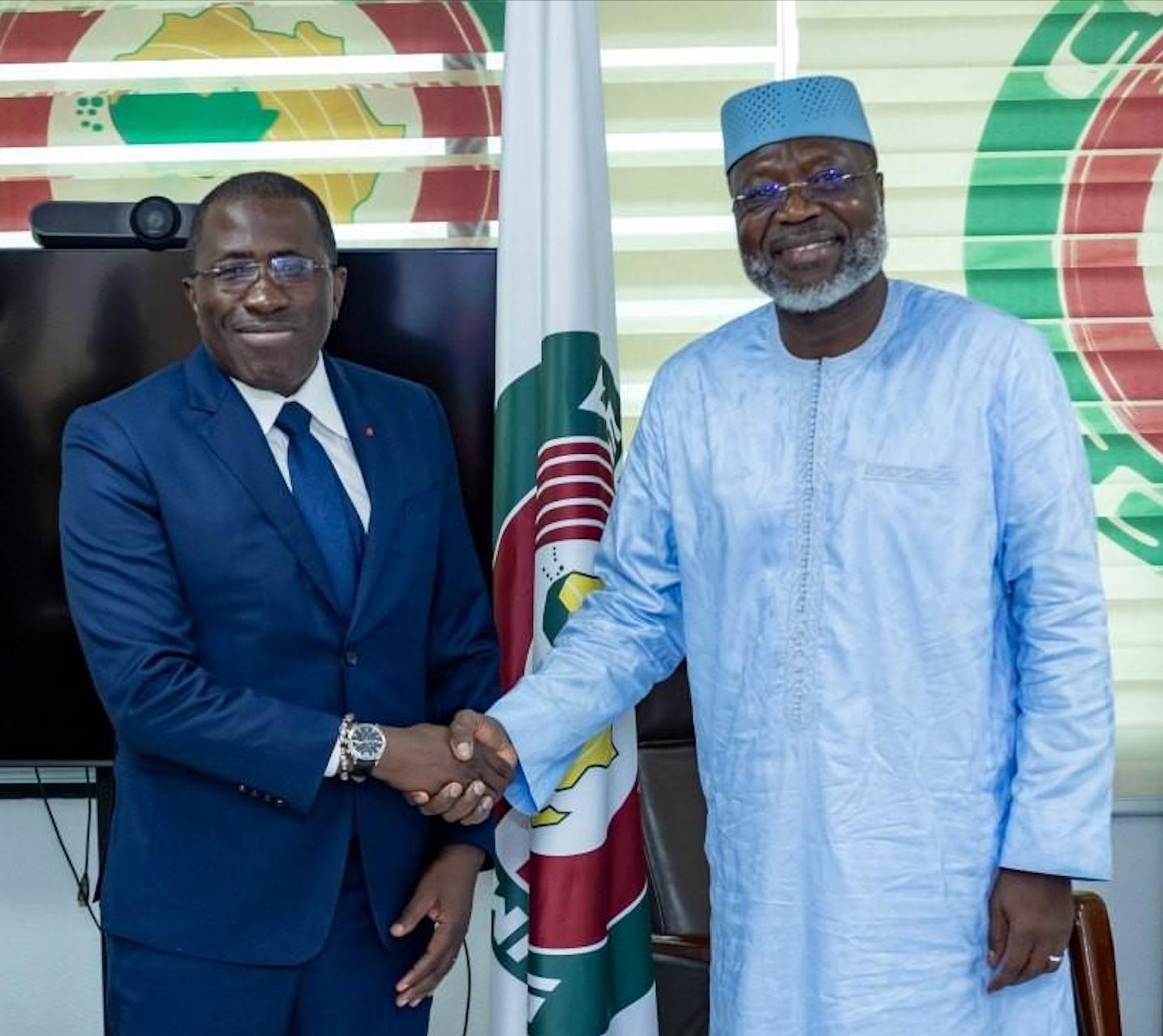
At the regional level, the Economic Community of West African States and the International Monetary Fund signed an agreement on March 27 in Abuja aimed at strengthening macroeconomic governance and coordinating economic policies in West Africa. The agreement includes enhanced policy dialogue, increased technical assistance and regional macroeconomic monitoring, and comes amid moderate but uneven economic growth, with persistent challenges related to inflation, public debt, global economic uncertainty and regional integration.[5]
Sources :
1]Benin
2]Burkina Faso
3]Nigeria
4]Central African Republic
5]ECOWAS